

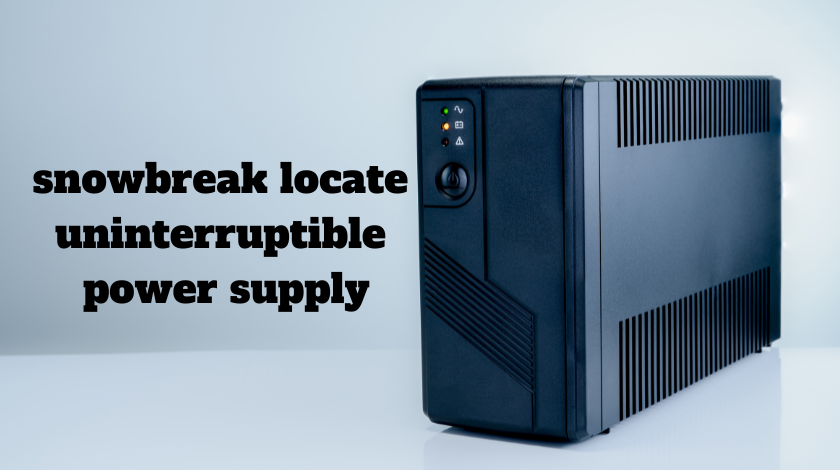
The ability to locate the uninterruptible power supply in Snowbreak environments is essential for maintaining system continuity, protecting critical infrastructure, and ensuring uninterrupted operations during power instability. We present a comprehensive, technically precise guide focused on Snowbreak locate uninterruptible power supply procedures, configurations, system layouts, and operational best practices. This article delivers authoritative clarity for users seeking accurate, actionable information aligned with real-world Snowbreak deployments.
Understanding Snowbreak Power Architecture
Snowbreak environments are designed with layered power redundancy to protect mission-critical systems. The uninterruptible power supply (UPS) serves as the backbone of this architecture, providing immediate power stabilization and short-term backup during outages or voltage irregularities.
Within Snowbreak systems, the UPS is typically integrated with:
-
Primary power distribution units
-
Backup generator interfaces
-
Environmental monitoring modules
-
Centralized control nodes
Correctly locating the UPS ensures rapid diagnostics, safe maintenance, and operational continuity.
Primary Locations of the Uninterruptible Power Supply in Snowbreak
The Snowbreak UPS location depends on system scale, deployment model, and facility layout. We identify the most common placement scenarios below.
Central Power Control Room Installation
In large Snowbreak facilities, the UPS is commonly installed in a dedicated power control room. This location provides:
-
Direct access to incoming utility feeds
-
Controlled temperature and humidity
-
Physical security and restricted access
-
Proximity to monitoring dashboards
The UPS cabinets are usually floor-mounted and clearly labeled within power distribution zones.
Server Room and Data Core Placement
For Snowbreak environments supporting digital operations, the UPS is often located in the server room or data core. In this configuration, the UPS directly supports:
-
Control servers
-
Network switches
-
Storage arrays
-
Environmental sensors
Rack-mounted UPS units are positioned at the base of server racks or within dedicated power racks to minimize cable length and power loss.
Modular Deployment Units
In modular Snowbreak systems, the uninterruptible power supply is integrated into self-contained power modules. These units are typically found:
-
Adjacent to operational zones
-
Within sealed technical enclosures
-
Behind access panels marked for power systems
This design allows rapid replacement and scalable expansion without disrupting the main infrastructure.
Identifying the UPS Using Snowbreak System Indicators
Snowbreak environments utilize standardized indicators to simplify UPS identification. We rely on the following visual and system cues:
-
UPS status panels with LED indicators
-
Digital displays showing battery load and runtime
-
Audible alert modules
-
System maps accessible via control terminals
Control interfaces often include a power topology view that visually highlights the UPS location within the facility layout.
Accessing the UPS Through Snowbreak Control Interfaces
Snowbreak systems provide centralized software access to all power components. To digitally locate the uninterruptible power supply, we follow these steps:
-
Access the main Snowbreak control terminal
-
Navigate to the Power Management section
-
Open the Redundancy and Backup Systems panel
-
Select Uninterruptible Power Supply
This interface displays real-time metrics, physical location identifiers, and connection pathways.
UPS Labeling and Identification Standards
Every Snowbreak UPS unit follows strict labeling protocols to ensure immediate recognition. Labels typically include:
-
UPS unit ID
-
Power capacity rating
-
Battery type and configuration
-
Installation zone code
-
Maintenance schedule markers
These identifiers are positioned on the front and consider safety regulations for rapid identification during emergencies.
Power Flow Mapping for Precise UPS Location
Power flow mapping is an essential method for locating the uninterruptible power supply in complex Snowbreak environments. We trace power by:
-
Identifying critical load endpoints
-
Following power cables to distribution panels
-
Tracking connections back to the UPS source
Snowbreak documentation often includes schematic diagrams that visually map the entire power flow, making UPS identification precise and efficient.
Environmental Requirements Around the UPS Location
Snowbreak UPS systems require controlled conditions to function optimally. We ensure the following environmental parameters are met at the UPS location:
-
Stable ambient temperature
-
Adequate ventilation and airflow
-
Low humidity levels
-
Dust and moisture protection
These conditions extend battery life and reduce the risk of system failure.
Battery Modules and Their Placement Within Snowbreak
UPS battery modules are either internal or housed in external battery cabinets. In Snowbreak installations, these cabinets are typically located:
-
Adjacent to the main UPS unit
-
Along the same power corridor
-
Within marked safety zones
Proper identification of battery placement is critical for maintenance and runtime assessment.
Safety Protocols When Locating the UPS
Safety compliance is integral when accessing power infrastructure. We adhere to the following Snowbreak safety protocols:
-
Restricted access authorization
-
Insulated tools and protective equipment
-
Clear signage indicating high-voltage systems
-
Lockout procedures during maintenance
These protocols ensure personnel safety while interacting with the uninterruptible power supply.
Maintenance Access Points and Service Clearances
Snowbreak UPS installations are designed with serviceability in mind. When locating the UPS, we verify:
-
Front and rear service clearance
-
Side access for battery replacement
-
Clear cable management pathways
These considerations allow efficient servicing without disrupting surrounding systems.
Redundancy and Secondary UPS Locations
High-availability Snowbreak environments may deploy redundant UPS systems. Secondary units are often located:
-
In parallel power rooms
-
On separate electrical circuits
-
In alternate facility zones
This configuration ensures continuous operation even if one UPS unit is offline.
Troubleshooting Power Events Through UPS Location Awareness
Knowing the exact Snowbreak UPS location accelerates troubleshooting during power events. We can quickly:
-
Inspect alarm indicators
-
Verify battery status
-
Confirm load distribution
-
Isolate affected circuits
Rapid access minimizes downtime and prevents cascading system failures.
Operational Best Practices for Long-Term Reliability
To maintain optimal performance, we consistently apply best practices related to UPS placement and access:
-
Keep the UPS area unobstructed
-
Perform routine inspections
-
Monitor system logs daily
-
Schedule battery health assessments
These practices ensure the uninterruptible power supply remains reliable throughout its operational lifespan.
Conclusion: Precision in Locating the Snowbreak Uninterruptible Power Supply
Accurate Snowbreak locate uninterruptible power supply procedures are fundamental to system reliability, safety, and operational efficiency. By understanding facility layouts, control interfaces, labeling standards, and power flow mapping, we achieve immediate and confident UPS identification. This level of precision supports uninterrupted operations and protects critical infrastructure under all power conditions.
