

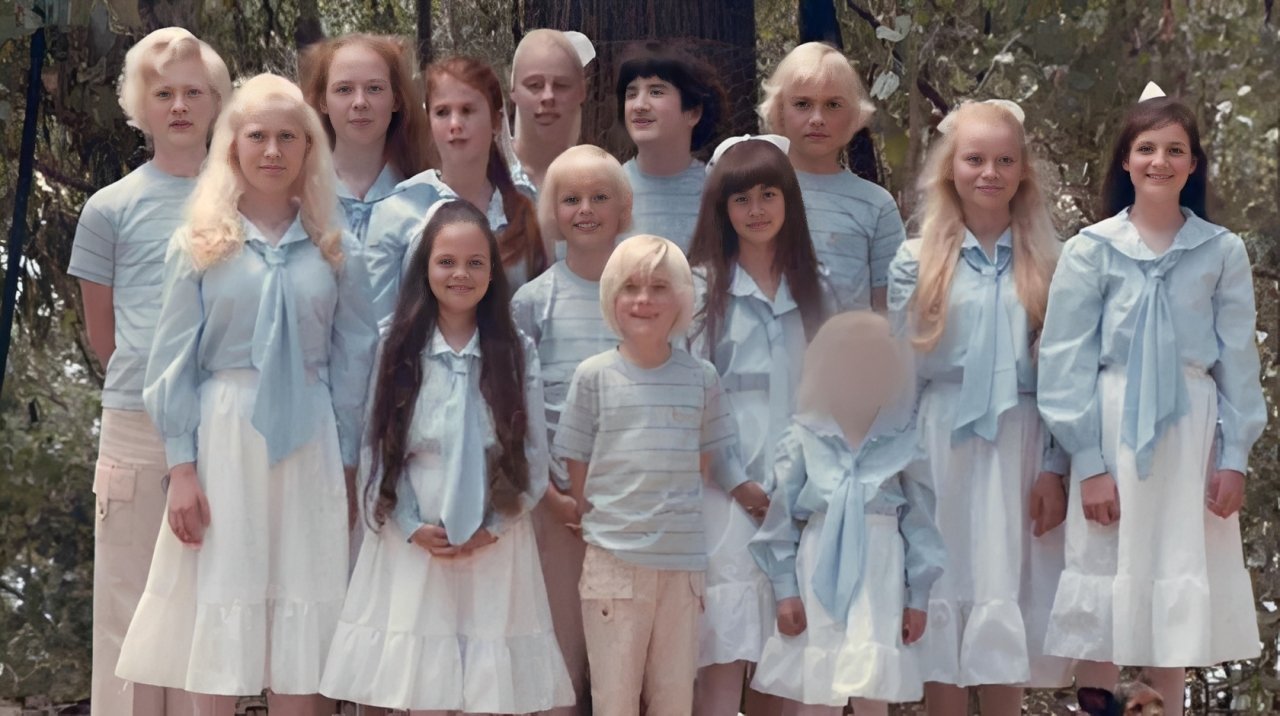
We present a comprehensive and authoritative examination of Anne Hamilton-Byrne, one of the most notorious cult leaders in Australian history. Her life and actions remain a subject of global interest due to the scale of psychological manipulation, prolonged abuse, and institutional failure associated with the group she led, commonly known as The Family. This account delivers a structured, factual, and deeply contextualized narrative designed to provide clarity and historical accuracy.
Early Life and Formation of Influence
Anne Hamilton-Byrne was born Evelyn Grace Victoria Edwards in 1921 in Australia. Her early life was marked by instability and frequent changes in personal identity, a pattern that later became central to her methods of control. As a young adult, she developed a keen interest in spirituality, mysticism, and alternative religious philosophies, drawing selectively from Christian theology, Eastern mysticism, and New Age ideologies.
By the 1950s, she had begun cultivating followers through yoga classes and spiritual discussion groups. These gatherings laid the foundation for what would later evolve into a tightly controlled and secretive organization.
The Creation of “The Family” Cult
The group led by Anne Hamilton-Byrne became known as The Family, a cult operating primarily in Victoria, Australia. The organization functioned under a rigid hierarchy, with Hamilton-Byrne positioned as the unquestioned authority. She presented herself as a reincarnation of Jesus Christ, a claim that formed the ideological core of the group.
Members were subjected to:
-
Absolute obedience
-
Social isolation
-
Financial exploitation
-
Psychological conditioning
Children within the group were raised under extreme control, deprived of formal education, and isolated from the outside world.
Systematic Child Abuse and Identity Manipulation
One of the most disturbing aspects of Anne Hamilton-Byrne’s legacy involves the systematic abuse of children. Several children were illegally adopted or obtained through fraudulent means. Their identities were altered using falsified birth certificates, and they were subjected to:
-
Physical punishment
-
Emotional deprivation
-
Forced uniform appearance
-
Heavy sedation with prescription drugs
Children were required to bleach their hair platinum blonde, reinforcing uniformity and erasing individuality. Discipline was harsh and often violent, justified as spiritual correction.
Psychological Control and Indoctrination Methods
Anne Hamilton-Byrne employed advanced psychological manipulation techniques to maintain dominance. These included:
-
Sleep deprivation
-
Confession rituals
-
Induced fear of apocalypse
-
Constant surveillance
Members were taught that the outside world was dangerous and corrupt. Dissent was framed as spiritual failure, reinforcing dependency on the group and its leader.
Use of Pharmaceuticals and Medical Abuse
A critical element of control involved the use of psychoactive drugs, including LSD and prescription sedatives. These substances were administered during so-called spiritual sessions, weakening resistance and reinforcing suggestibility. Medical professionals within the group enabled this abuse, illustrating how authority structures were exploited to legitimize harm.
Legal Investigation and Criminal Charges
After decades of secrecy, law enforcement attention intensified in the late 1980s. Investigations revealed widespread child abuse, fraud, and conspiracy. In 1993, Anne Hamilton-Byrne was arrested in the United States and extradited to Australia.
She was ultimately convicted in 1995 on charges including false registration of births. While many believed the legal consequences did not fully reflect the scale of abuse, the convictions marked a critical acknowledgment of wrongdoing.
Institutional Failures and Systemic Blind Spots
The prolonged operation of The Family cult exposed significant failures within social services, medical oversight, and regulatory frameworks. Warning signs were repeatedly missed or ignored, allowing abuse to continue unchecked for decades.
This case remains a landmark example in discussions about:
-
Cult dynamics
-
Child protection systems
-
Regulatory accountability
Survivor Testimonies and Public Reckoning
Former members of The Family have since shared detailed testimonies describing life under Anne Hamilton-Byrne’s control. These accounts reveal long-term trauma, identity loss, and the challenges of reintegration into society.
Survivor voices have been central to public understanding, contributing to documentaries, books, and academic studies that continue to shape awareness of coercive control.
Cultural Impact and Media Representation
The story of Anne Hamilton-Byrne has been explored extensively in media, including investigative journalism and documentary series. These portrayals emphasize the mechanisms of manipulation rather than sensationalism, contributing to broader conversations about how charismatic leaders exploit belief systems.
Her case is frequently cited in studies of cult psychology, authoritarian leadership, and coercive persuasion.
Legacy and Ongoing Relevance
The legacy of Anne Hamilton-Byrne extends beyond her lifetime. Her actions continue to inform:
-
Cult awareness education
-
Policy reform discussions
-
Mental health advocacy
Understanding this history remains essential for preventing similar abuses and improving early intervention strategies.
Conclusion: A Case That Demands Remembrance
We conclude that Anne Hamilton-Byrne represents a profound cautionary example of how unchecked authority, ideological manipulation, and institutional neglect can converge with devastating consequences. Through factual examination and survivor-centered narratives, her story stands as a critical lesson in vigilance, accountability, and the protection of vulnerable individuals.
