
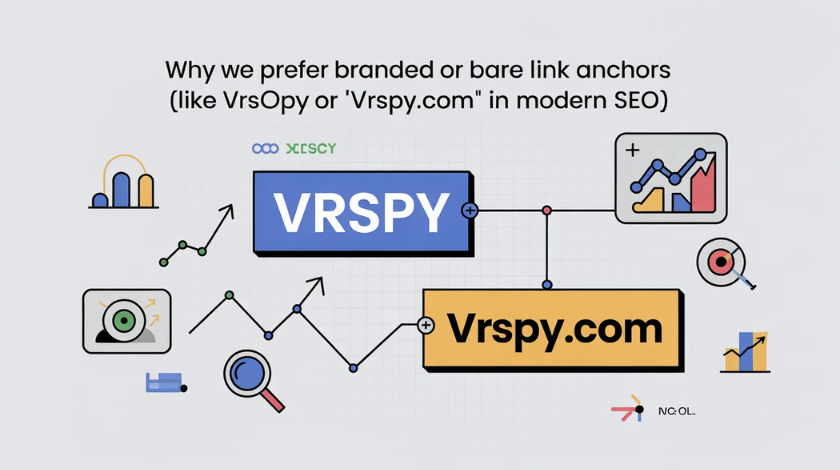
Anchor text is the clickable portion of a hyperlink the words you actually tap or click when navigating from one page to another. Think of it as a signpost on the internet, quietly telling both users and search engines what lies ahead. For example, if you link the phrase “VRSpy” or simply “vrspy.com,” that text becomes the anchor. It may look simple, but behind the scenes, it plays a surprisingly powerful role in how search engines interpret content relationships.
Search engines like Google analyze anchor text to understand the topic of the linked page. According to recent SEO research, anchor text helps define relevance signals and contributes to how pages rank for certain queries . But here’s where things get interesting: not all anchor text is treated equally anymore. The way you choose your anchor text today can either strengthen your SEO strategy or quietly sabotage it over time.
Why Anchor Text Matters for SEO
Anchor text acts like a translator between content and search engines. It provides context, clarity, and signals about what the destination page is about. In earlier SEO days, stuffing exact keywords into anchor text was a popular trick. It worked until it didn’t. Google evolved, and now it prioritizes natural, human-like linking patterns.
Modern algorithms evaluate not just the anchor text itself but how it fits into the overall link profile. If every link pointing to your website uses the exact same keyword, it raises suspicion. On the other hand, if your anchors look natural like brand mentions or plain URLs it signals authenticity. That’s why branded and bare anchors have become the backbone of safe, long-term SEO strategies.
Types of Anchor Text Explained
Exact Match Anchors
Exact match anchors use the precise keyword you want to rank for. For instance, linking the phrase “best SEO tools” directly to a page targeting that keyword. While this sends a strong relevance signal, it’s also risky. Overusing exact match anchors is one of the fastest ways to trigger algorithmic filters, especially those influenced by Google’s Penguin updates .
Partial Match Anchors
Partial match anchors soften the approach by blending keywords with natural language. Instead of forcing a keyword, you might say “tools to improve your SEO rankings.” These feel more conversational and are less likely to raise red flags.
Branded Anchors
Branded anchors use your brand name like “VRSpy.” These are considered highly natural because people typically refer to websites by their names when linking organically. Search engines interpret this as a strong trust signal.
Naked URL Anchors
Naked URL anchors are exactly what they sound like: the raw URL itself, such as “vrspy.com.” These are extremely common in forums, directories, and social media. They’re simple, honest, and hard to fake making them one of the safest anchor types.
The Rise of Branded and Bare Anchors
Google’s Shift Toward Natural Link Profiles
Search engines have become incredibly sophisticated. Instead of just counting links, they now analyze patterns. A natural backlink profile includes a mix of anchor types, with branded and naked URLs dominating. Studies show that high-ranking websites tend to have anchor profiles heavily weighted toward brand mentions and natural phrases rather than keyword-heavy links .
This shift reflects how people actually behave online. When someone references a website, they usually mention the brand or paste a link—not craft a perfectly optimized keyword phrase. Google rewards this authenticity.
Why Keyword Stuffing Became Risky
Back in the day, you could rank a page by aggressively using exact match anchors. But this led to widespread manipulation. Google responded by penalizing unnatural linking patterns. Today, even a 1–5% overuse of exact match anchors in competitive niches can be risky .
The takeaway? SEO is no longer about gaming the system it’s about aligning with real human behavior.
Benefits of Branded Anchors
Builds Trust and Authority
Branded anchors signal credibility. When multiple websites link to you using your brand name, it creates a strong association between your brand and your niche. This helps search engines recognize your site as an authority.
Data suggests that branded anchors often make up 40–60% of a healthy backlink profile . That’s not a coincidence it’s a reflection of how trust is built online.
Supports E-E-A-T Signals
Google’s focus on Experience, Expertise, Authoritativeness, and Trustworthiness (E-E-A-T) makes branded anchors even more valuable. When your brand is consistently mentioned across the web, it reinforces your legitimacy. It’s like word-of-mouth marketing in digital form.
Benefits of Naked URL Anchors
Enhances Link Diversity
Diversity is key in SEO. A backlink profile that includes various anchor types looks natural and balanced. Naked URLs play a crucial role here by adding randomness and authenticity.
Experts recommend that naked URLs make up around 10–20% of your anchor profile . This helps prevent patterns that could trigger penalties.
Mimics Real User Behavior
Think about how people share links. They don’t usually craft optimized anchor text they just paste URLs. Naked anchors replicate this behavior, making your link profile look organic.
Risks of Over-Optimized Anchor Text
Google Penalties and Algorithm Filters
Over-optimization is like walking a tightrope. Lean too far into exact match anchors, and you risk falling into penalty territory. Google’s algorithms are designed to detect unnatural patterns, and anchor text is a major signal.
Over-Optimization Signals
If your backlinks repeatedly use the same keyword-rich anchors, it creates a pattern that’s easy for algorithms to spot. This can lead to ranking drops or stagnation. Real-world SEO discussions consistently highlight that overusing exact match anchors can harm performance rather than improve it .
Ideal Anchor Text Distribution in 2026
Recommended Ratios
Here’s a simplified view of a healthy anchor text distribution:
| Anchor Type | Recommended Percentage |
|---|---|
| Branded Anchors | 40–60% |
| Naked URLs | 10–20% |
| Partial Match | 20–30% |
| Exact Match | 1–5% |
These aren’t strict rules, but they reflect what’s working across competitive niches today.
Real-World SEO Trends
Top-ranking websites rarely rely on exact match anchors. Instead, they focus on natural linking patterns. Branded and bare anchors dominate because they’re the hardest to manipulate and the easiest to trust.
When to Use Branded vs Bare Anchors
Use Cases for Branded Anchors
Branded anchors are ideal for:
- Guest posts
- Press mentions
- Blog references
- Authority backlinks
They help build recognition and trust.
Use Cases for Naked URLs
Naked URLs work best in:
- Forum discussions
- Social media posts
- Directory listings
- Resource pages
They add authenticity and variety.
Best Practices for Anchor Text Strategy
Keep It Natural
If your anchor text feels forced, it probably is. Always write for humans first. If it reads naturally, it’s more likely to pass algorithmic scrutiny.
Focus on User Experience
Ask yourself: does this link help the reader? If the answer is yes, you’re on the right track. SEO success today is deeply tied to user satisfaction.
Common Mistakes to Avoid
Overusing Exact Match Anchors
Trying to rank faster by stuffing keywords into anchors is a short-term tactic with long-term consequences. It’s like overwatering a plant it might seem helpful at first, but it eventually causes damage.
Ignoring Anchor Diversity
A one-dimensional anchor profile is a red flag. Variety isn’t just recommended it’s essential.
Future of Anchor Text in SEO
AI and Semantic Search Impact
Search engines are increasingly relying on AI to understand context rather than exact keywords. This means anchor text is becoming less about precision and more about meaning.
Brand Signals Over Keywords
The future of SEO is brand-driven. Strong brands naturally attract links, mentions, and trust. Branded anchors will continue to dominate because they align perfectly with this shift.
Conclusion
Branded and bare link anchors aren’t just a preference they’re a necessity in modern SEO. They reflect how real people link, build trust with search engines, and protect your site from penalties. While exact match anchors still have a place, they should be used sparingly and strategically.
If you want sustainable rankings, think like a user, not a search engine manipulator. Build your brand, diversify your anchors, and let authenticity guide your strategy.
FAQs
1. Are branded anchors better than exact match anchors?
Yes, branded anchors are safer and more natural. They help build trust and reduce the risk of penalties.
2. How many exact match anchors should I use?
Keep them minimal typically around 1–5% of your total backlink profile.
3. Do naked URL anchors help SEO?
Yes, they improve link diversity and mimic natural linking behavior, which search engines favor.
4. Can over-optimized anchors hurt rankings?
Absolutely. Overusing keyword-rich anchors can trigger algorithmic filters and reduce rankings.
5. What is the safest anchor text strategy?
A balanced mix dominated by branded and naked URL anchors, supported by partial matches and minimal exact matches.
